
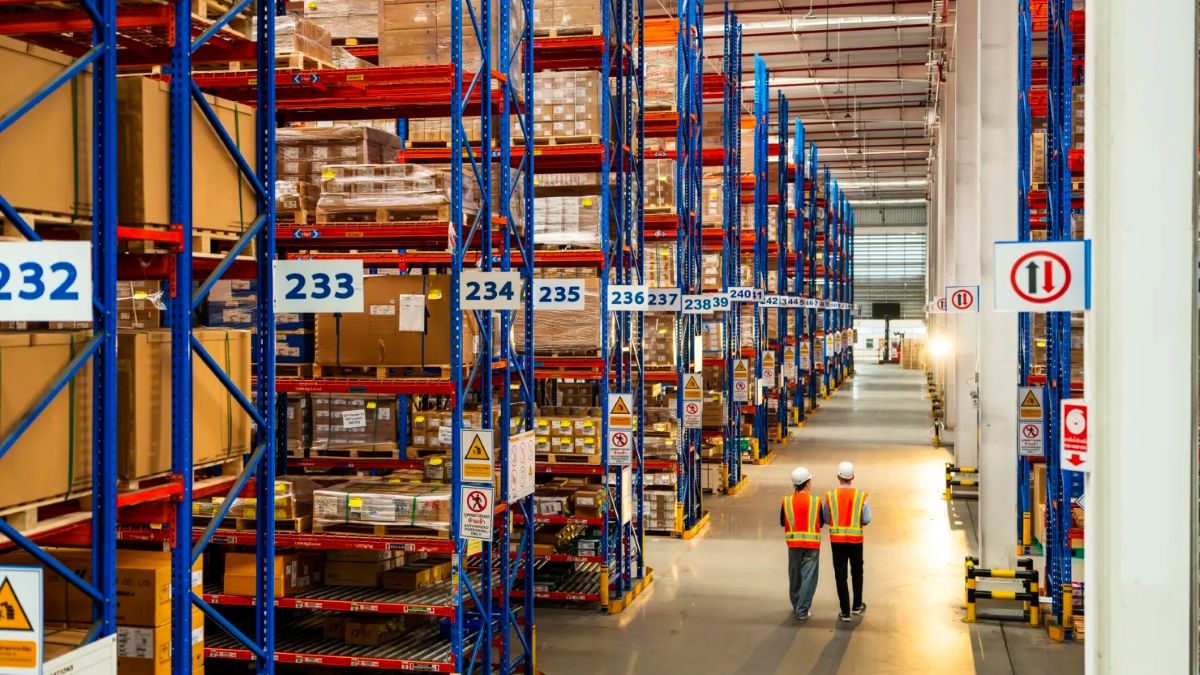
After a pandemic-driven boom and subsequent pullback, warehouse real estate supply and demand is beginning to rebalance, showing renewed signs of activity and stability. The sector is adjusting to shifts in e-commerce, logistics, and manufacturing trends, creating new opportunities for investors and operators.
E-commerce remains an important driver, but more consumers are returning to brick-and-mortar shopping. Warehouse tenants are increasingly prioritizing efficiency, power availability, and location over sheer square footage. Developers and landlords are adapting to these new market priorities.
New construction has slowed, while federal policies promoting onshoring of manufacturing are helping warehouse real estate counter economic uncertainty and persistently high interest rates. Rent increases are moderating, and in some markets, rents are even softening slightly due to oversupply. “Industrial property rents are showing signs of stabilization, indicating a more balanced market environment,” said Judy Guarino, managing director of commercial mortgage lending at JPMorgan Chase.
Big-box
The big-box subsector, which includes large distribution and warehouse facilities for logistics and e-commerce fulfillment, represents about a quarter of U.S. industrial warehouse space. Vacancies are near cyclical highs, and new construction is contracting. In the first half of 2025, supply still outpaced demand, but the gap has narrowed, according to Colliers research. Third-party logistics firms, including Ryder and DHL, are driving much of this demand.
“The third-quarter demand has far exceeded the entire first half of the year, which is a strong indicator that supply and demand are moving toward balance,” said Stephanie Rodriguez, national director of industrial services at Colliers. Across the 20 largest markets, big-box vacancy rates increased slightly to 11%, while new supply totaled 48 million square feet—far below the 330 million square feet delivered in 2023. Rents are expected to stabilize before resuming growth.
Big-box facilities remain a major segment of the warehouse real estate market, fueled by online retail and companies seeking supply chain efficiency. Economic and tariff policy changes have tempered demand, but as these factors stabilize, growth may return, especially if interest rates fall.
Supply Chain
Warehouse demand is also being shaped by evolving supply chain needs. Prologis, in its report “Bold Predictions for 2026,” noted that e-commerce companies could account for nearly 25% of new leases, with goods sold online reaching 20% globally. Power-ready logistics facilities will be essential for automation and manufacturing, while defense-related demand in the U.S. and Europe will revive older industrial corridors. Shrinking trucking capacity is expected to drive double-digit transportation cost increases, further boosting the value of well-located warehouse real estate.
Power
Power availability is becoming a key factor in industrial real estate pricing. Beyond e-commerce and data centers, energy-rich locations are increasingly valued for supporting automation and dense networks. “Opportunity lies in power-advantaged infill assets where proximity now drives advantage,” according to Hines, a global real estate investment manager.
Reshoring
Hines research links warehouse net absorption to manufacturing construction, showing that reshoring could increase overall warehouse demand by about 35% over the next five years. “Industrial properties near ports remain vital,” Guarino said. Tariffs may increase costs, but proximity to shipping channels is critical for supply chain resilience.
Proximity
Amazon illustrates this trend by emphasizing efficiency, automation, and proximity over sheer scale. CoStar’s Juan Arias noted that Amazon’s leasing has slowed—just 61 properties this year versus 100 in 2024—but the company still prioritizes modern, high-ceiling distribution centers that support logistics efficiency.
AI
Artificial intelligence and property technology are also reshaping warehouse real estate. AI tools help owners analyze supply chains, traffic, and market data, optimize inventory, and predict maintenance needs, all of which reduce costs and improve operational efficiency.