
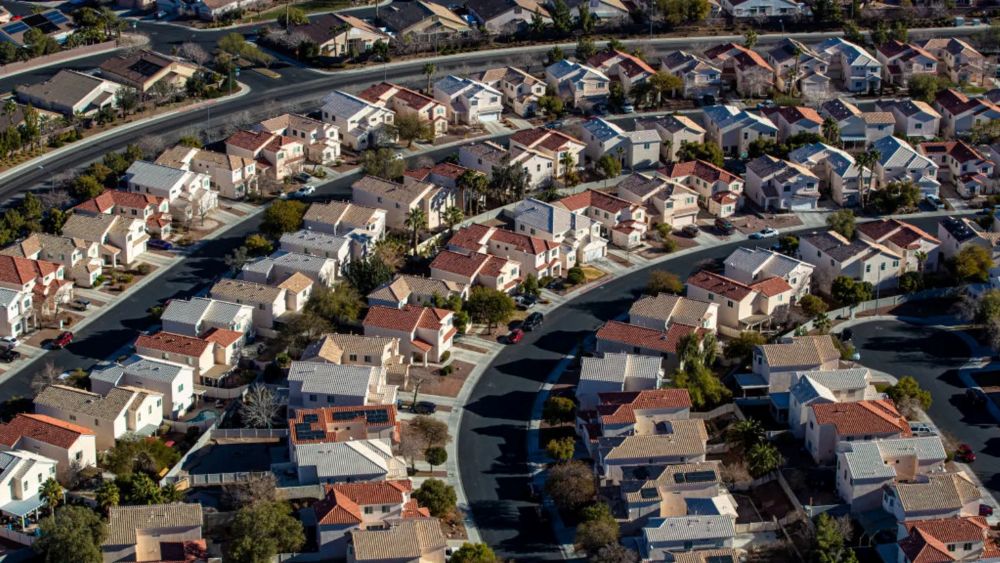
Home equity losses are accelerating as weakening home prices erase the massive gains homeowners enjoyed during the pandemic boom. After years of rapid appreciation, many markets are now seeing values stall or decline, directly impacting household wealth.
Borrower equity declined 2.1% in the third quarter compared with the same period last year, representing a collective loss of $373.8B, according to a new report from Cotality. The drop follows multiple years of record-setting equity growth. Despite the pullback, homeowners with mortgages still hold a combined $17.1T in net equity nationwide.
For individual homeowners, the decline translated into an average equity loss of $13,400 during the third quarter. At the same time, the number of homes in a negative equity position — where the mortgage balance exceeds the home’s value — jumped 21% year over year to 1.2M properties.
“As the pace of home price growth slows and markets recalibrate from pandemic peaks, we’re seeing a clear shift in equity trends,” said Selma Hepp, chief economist at Cotality. She noted that affordability pressures have pushed many first-time and lower-income buyers toward minimal down payments or piggyback loans, increasing vulnerability to home equity losses as prices soften.
Many homeowners now facing negative equity likely purchased more recently, when mortgage rates were higher and prices were near their peak. At the same time, owners who benefited from strong appreciation over the past five years have increasingly tapped their equity through cash-out refinances and home equity loans.
Nationally, home values remain about 52% higher than they were in January 2020, according to the S&P Cotality Case-Shiller index. Even after rates surged in 2023, the average homeowner still gained roughly $25,000 in equity that year. In 2024, however, the average gain dropped sharply to just $4,900.
Equity trends vary widely by market. Boston, Chicago, and New York continue to post positive equity growth, while the steepest losses were recorded in Los Angeles, San Francisco, Washington, Miami, and Houston, Texas, according to the report.
“The future performance of highly leveraged loans will hinge on the strength of the U.S. economy and labor market,” Hepp said. While expectations for economic resilience remain, she emphasized the importance of closely monitoring home equity losses as market conditions evolve.