
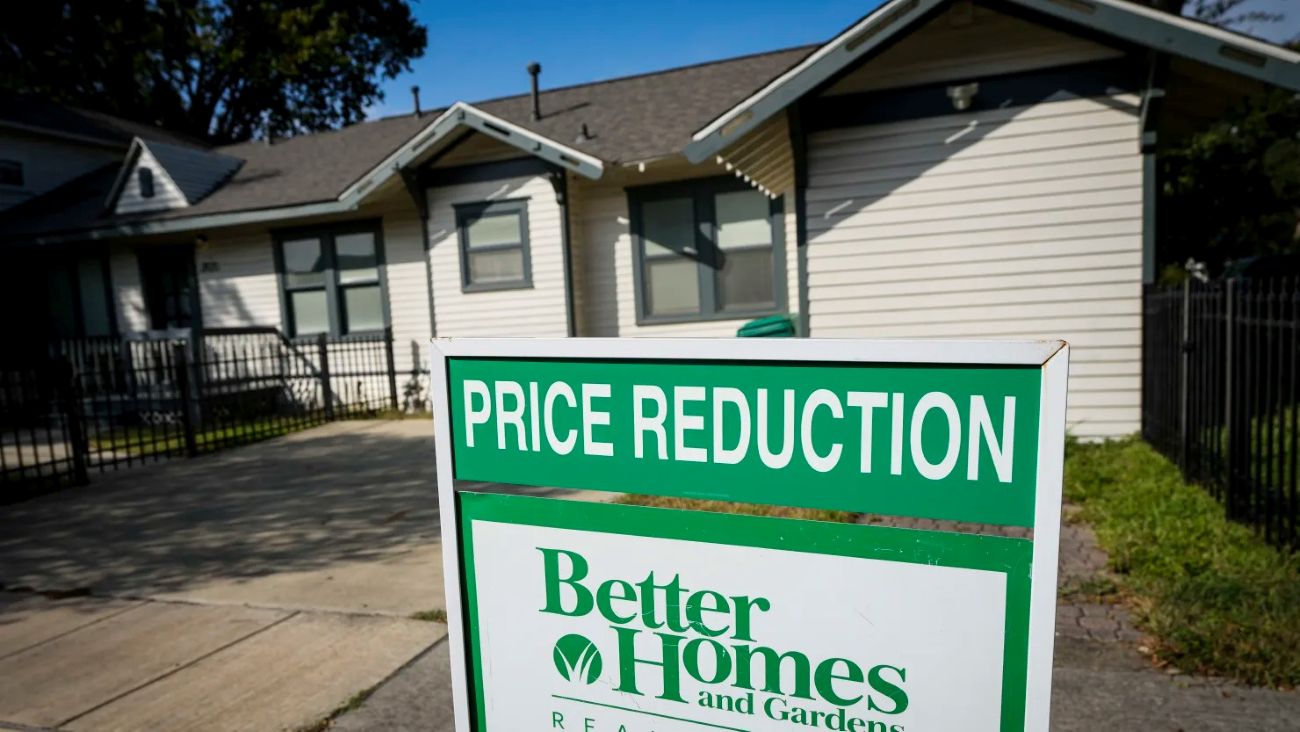
Home prices go negative for the first time in more than two years, slipping slightly compared with last year, according to daily high-frequency listing data from Parcl Labs covering single-family homes, condos, and townhomes, both new and existing.
Prices may remain under pressure, as national home values are down 1.4% over just the past three months, signaling continued softness heading into the coming year.
At the national level, home prices have not been negative on a year-over-year basis since mid-2023, which followed the Federal Reserve’s aggressive rate hikes off near-zero levels. Between March 2022 and June 2023, the average rate on a 30-year fixed mortgage jumped from 3.9% to just over 7%, according to Mortgage News Daily.
Even then, prices were negative only briefly. The current environment bears little resemblance to the Great Financial Crisis, when home prices fell 27% from their 2006 peak to the 2012 trough, based on the S&P Case-Shiller National Home Price Index.
“More recently we have seen a period of national softness emerging after the rapid run-up during the Covid years of 2020 to 2022,” said Jason Lewris, co-founder of Parcl Labs. “The sharp increase in mortgage rates in 2022 and 2023 created an affordability shock. Buyers were priced out, sales volumes dropped, and sellers had to reset expectations. Historically, that mix of affordability pressure, weaker demand, and excess inventory tends to drive broad price declines.”
Inventory levels remain historically low, but they have risen from near-record troughs. Active listings in November were nearly 13% higher than in November 2024, while new listings increased just 1.7%, according to Realtor.com. Sellers are also pulling homes off the market at elevated rates.
While prices nationally are down less than 1%, some metro areas are seeing sharper corrections. Austin, Texas, prices are down 10% year over year, while Denver has declined 5%, according to Parcl Labs. Tampa and Houston both posted 4% drops, and Atlanta and Phoenix saw declines of 3%.
Other markets continue to post gains. Cleveland recorded a 6% increase, while Chicago and New York City both saw prices rise 5%, and Philadelphia posted modest growth. Unlike many other indexes, Parcl’s data captures both new and existing homes. Meanwhile, the ongoing government shutdown has limited access to data on housing starts, permits, and new-home sales, complicating supply forecasts.
Despite that uncertainty, builders reporting quarterly earnings say demand remains soft and buyer incentives are still necessary. Homebuilder sentiment remains firmly in negative territory.
“We continue to see demand-side weakness as a softening labor market and stretched consumer finances are contributing to a challenging sales environment,” said Robert Dietz, chief economist at the National Association of Home Builders. “After a decline in single-family housing starts in 2025, NAHB expects a slight rebound in 2026 as future sales conditions improve marginally.”
Mortgage rates have shown little movement over the past three months and barely reacted to the Federal Reserve’s most recent rate cut. As a result, home prices are unlikely to see dramatic shifts in the near term.
“Our base case is not a deep national downturn,” Lewris said. “Instead, we expect a period where prices hover around zero, with small positive or negative year-over-year changes rather than the double-digit gains seen during the pandemic. The direction will largely depend on mortgage rates and the broader economy.”