
The recovery in CRE deal volume has been slow and uneven, closely mirroring the Federal Reserve’s shifting interest rate policy over the past several years. The two remain tightly linked, shaping both investor confidence and transaction timing.
After building meaningful momentum coming out of the pandemic, the commercial real estate market has faced a difficult year. Higher borrowing costs and economic uncertainty have weighed heavily on deal-making activity.
October marked a turning point. It was the first month to post negative year-over-year CRE deal volume growth since the post-rate-hike recovery began in early 2024, according to monthly data from Moody’s provided exclusively to CNBC’s Property Play. The dataset tracks the top 50 commercial real estate property sales nationwide.
Earlier in the recovery, deal volume growth had turned positive and was approaching pre-pandemic levels by the end of last year, signaling optimism that conditions were stabilizing.
“More than an imminent downturn in the CRE capital markets, the slip to negative growth in October 2025 reflects the stalemate going on between buyers and sellers,” said Kevin Fagan, head of CRE capital markets research at Moody’s. “The bottom of the U-shaped recovery from 2023 low volumes has been extended by persistently high interest rates and the policy and economic uncertainty of 2025.”
Despite the slowdown, October remained relatively active. Sales totaled $24.4 billion, roughly 70% of the transaction volume seen in October 2019. While total dollar volume is still higher than last year, the pace of growth has slowed considerably since 2023.
By property type, industrial and multifamily assets dominated the top 50 deals. Hotels were the only sector to post year-over-year improvement, recording 6% growth after a negative third quarter.
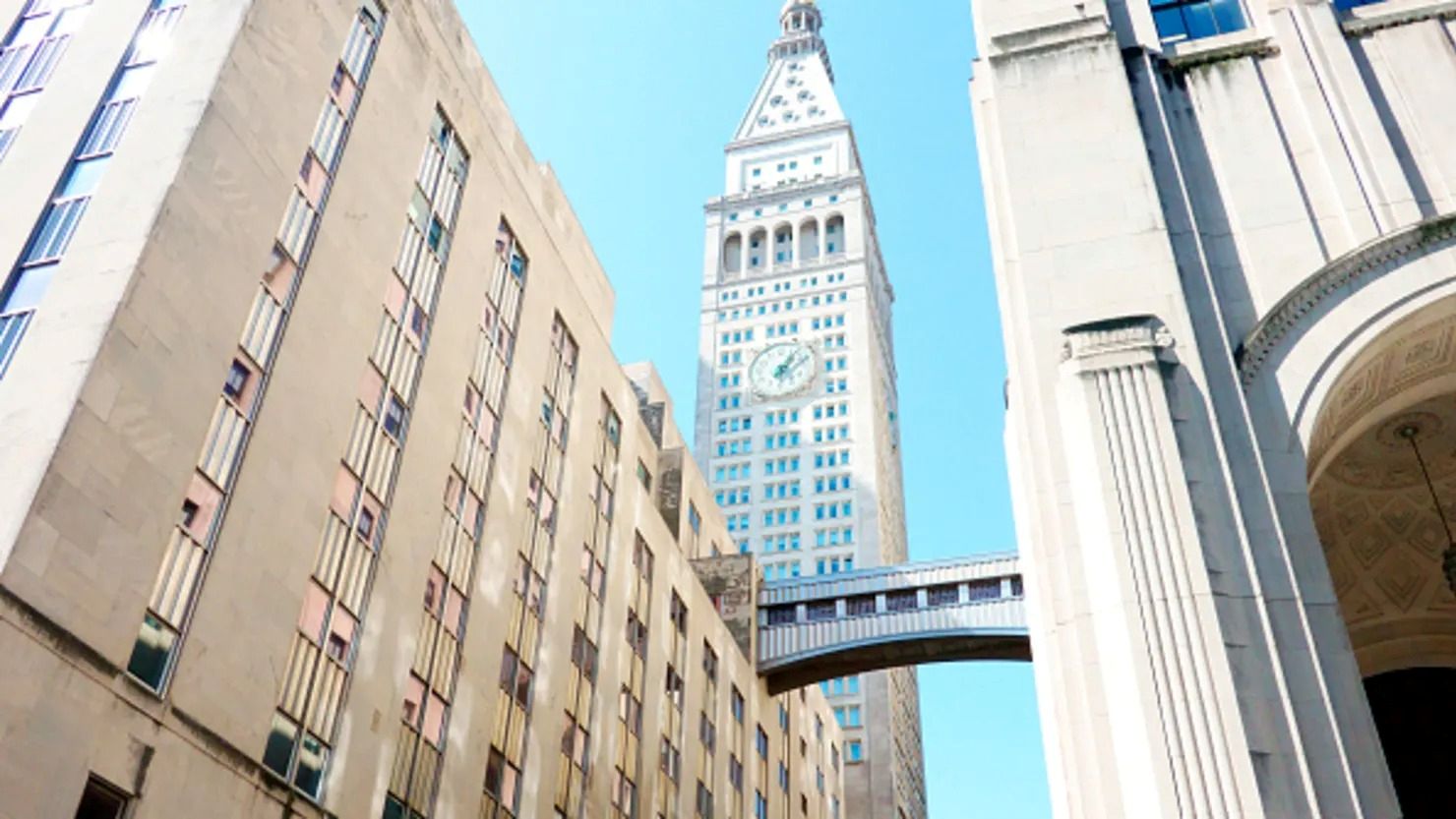
One standout transaction was the sale of the New York Edition hotel at 5 Madison Avenue. The property sold for $231.2 million, moving from the Abu Dhabi Investment Authority to Kam Sang Company, a real estate development firm.
“The New York Edition hotel is notable because of the high sale price, a Middle Eastern sovereign wealth fund exiting New York City, and the building’s history,” Fagan said. Originally known as the MetLife Clock Tower, the structure was the tallest building in the world from 1910 to 1913 before later being converted into a hotel.
“They are nearly worthless as offices, but extremely valuable as a hotel and an apartment building, respectively,” Fagan added, referencing similar conversions such as the Woolworth Building.
Multifamily experienced the sharpest pullback in October, with deal volume down 27% compared with 2024. In the four months prior, the sector had been trading above pre-Covid levels, and despite the dip, assets largely continued to sell at premiums to earlier transactions.
Office properties remained in a fragile recovery phase, often trading at discounts or undergoing conversions to alternative uses.
The largest October office transaction involved the sale of Sotheby’s headquarters to Weill Cornell, a move that likely signals a conversion to healthcare or medical office use, according to Fagan.
Separately, New York Life acquired a distressed Manhattan office building from BGO for nearly half of its previous 2015 sale price.
“That transaction shows there is still institutional interest in office assets priced at discounts,” Fagan said. “It reinforces the idea that well-located office buildings retain a long-term value floor and an enduring utility in strong markets.”