
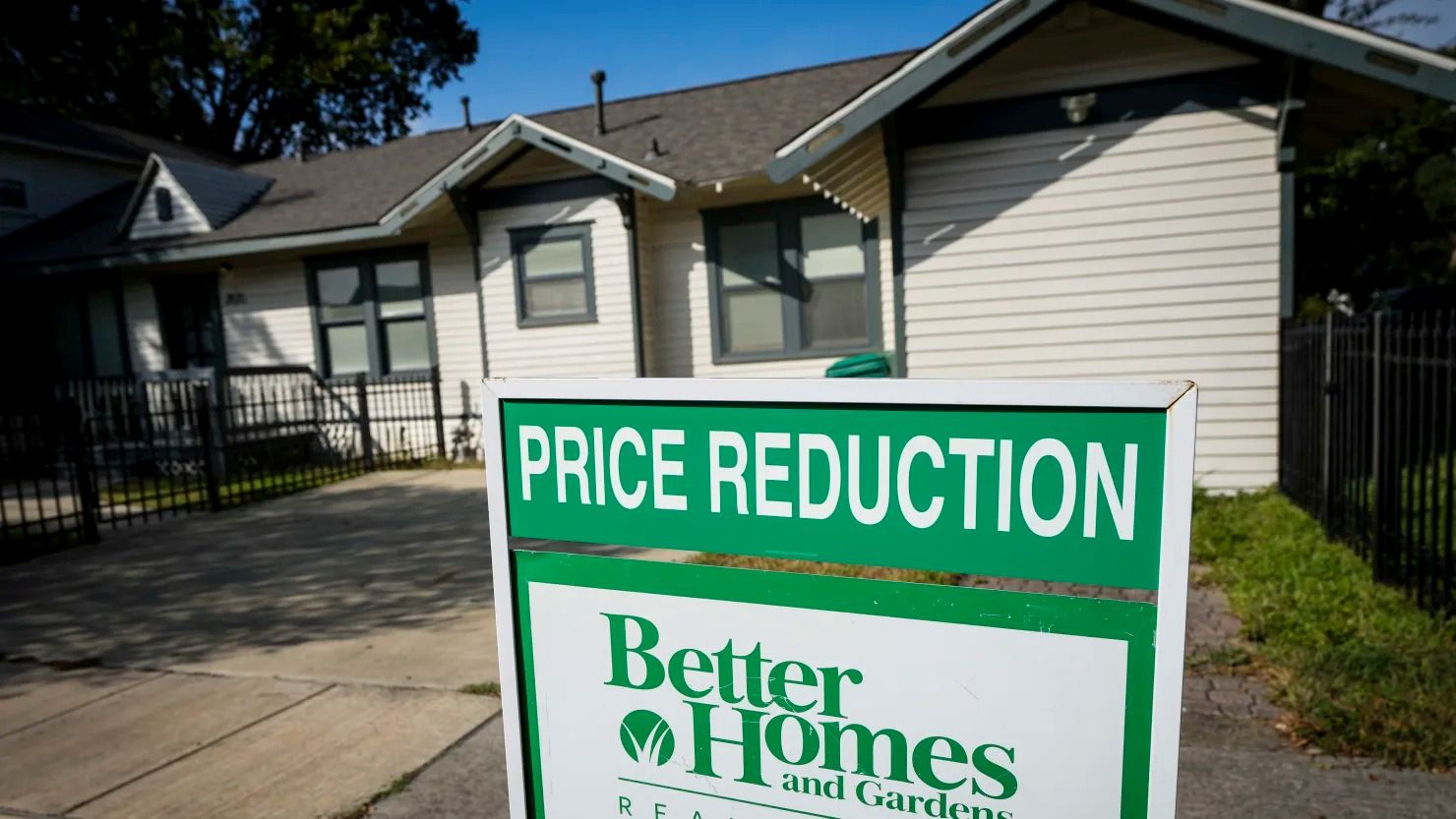
Home prices turn negative for the first time in more than two years, slipping slightly below last year’s levels, according to new daily data from Parcl Labs. The firm tracks high-frequency listing prices for single-family homes, condos, and townhomes across both new and existing inventory nationwide.
Prices may remain under pressure for some time. Over just the past three months, national home prices are down 1.4%, signaling continued softness rather than a short-term blip.
At the national level, home prices have not posted a year-over-year decline since mid-2023, roughly a year after the Federal Reserve began raising interest rates from near-zero levels and mortgage rates surged. Between March 2022 and June 2023, the average 30-year fixed mortgage rate jumped from 3.9% to just over 7%, according to Mortgage News Daily.
Even during that period, however, prices were negative on a year-over-year basis for only a few months. The current slowdown remains far less severe than the Great Financial Crisis, when national home prices plunged 27% from their 2006 peak to their 2012 trough, according to the S&P Case-Shiller National Home Price Index.
“More recently we have seen a period of national softness emerging after the rapid run-up during the Covid years, 2020 to 2022,” said Jason Lewris, co-founder of Parcl Labs. He noted that higher mortgage rates in 2022 and 2023 created an affordability shock that sidelined buyers, slowed sales, and forced sellers to reset expectations — conditions that historically lead to broader price declines.
Inventory remains historically low but has begun to rise from record lows. Active listings in November were nearly 13% higher than a year earlier, while new listings rose just 1.7%, according to Realtor.com. At the same time, sellers are pulling homes off the market at an unusually high rate.
While prices nationally are down less than 1%, some markets are experiencing sharper declines. Austin, Texas, saw prices fall 10% year over year, while Denver posted a 5% drop, according to Parcl Labs. Tampa and Houston both recorded 4% declines, with Atlanta and Phoenix down about 3%.
Other markets are still posting gains. Cleveland saw prices rise 6%, while Chicago and New York City both recorded 5% increases. Philadelphia prices climbed 3%, and Pittsburgh and Boston each posted gains of 2%, according to Parcl.
Unlike many other housing indexes that focus solely on existing homes, Parcl’s data includes both new and existing properties. With no recent government data available on housing starts, permits, or new-home sales due to the government shutdown, it remains difficult to fully assess future supply conditions.
That said, homebuilders reporting quarterly earnings continue to signal weak demand and reliance on incentives. Builder sentiment remains firmly in negative territory.
“We continue to see demand-side weakness as a softening labor market and stretched consumer finances are contributing to a difficult sales environment,” said Robert Dietz, chief economist at the National Association of Home Builders. NAHB forecasts a slight rebound in single-family starts in 2026 following a decline in 2025.
Mortgage rates have remained relatively stable over the past three months and showed little reaction to the Federal Reserve’s most recent rate cut. As a result, home prices are unlikely to see dramatic movement in the near term.
“Our base case from here is not a deep national downturn, but a period where prices hover around zero,” Lewris said. Whether home prices turn negative or modestly positive will largely depend on mortgage rates and the broader strength of the U.S. economy.